Doctor Burnout: Need Solutions, Not Just Apps?
- High-volume practitioners in India face immense pressure due to a skewed doctor-patient ratio, leading to burnout and potential compromises in patient care.
- Simply adding another app to their workflow often exacerbates the problem, increasing the cognitive load and administrative burden.
- Effective solutions should focus on streamlining processes, delegating tasks, and leveraging technology to reduce workload, not just digitize existing inefficiencies.
- Addressing the root causes of high patient volume, such as limited access to primary care and preventive health services, is crucial for long-term relief.
- A holistic approach that combines technology, process optimization, and support systems is essential to create a sustainable and manageable practice for Indian doctors.
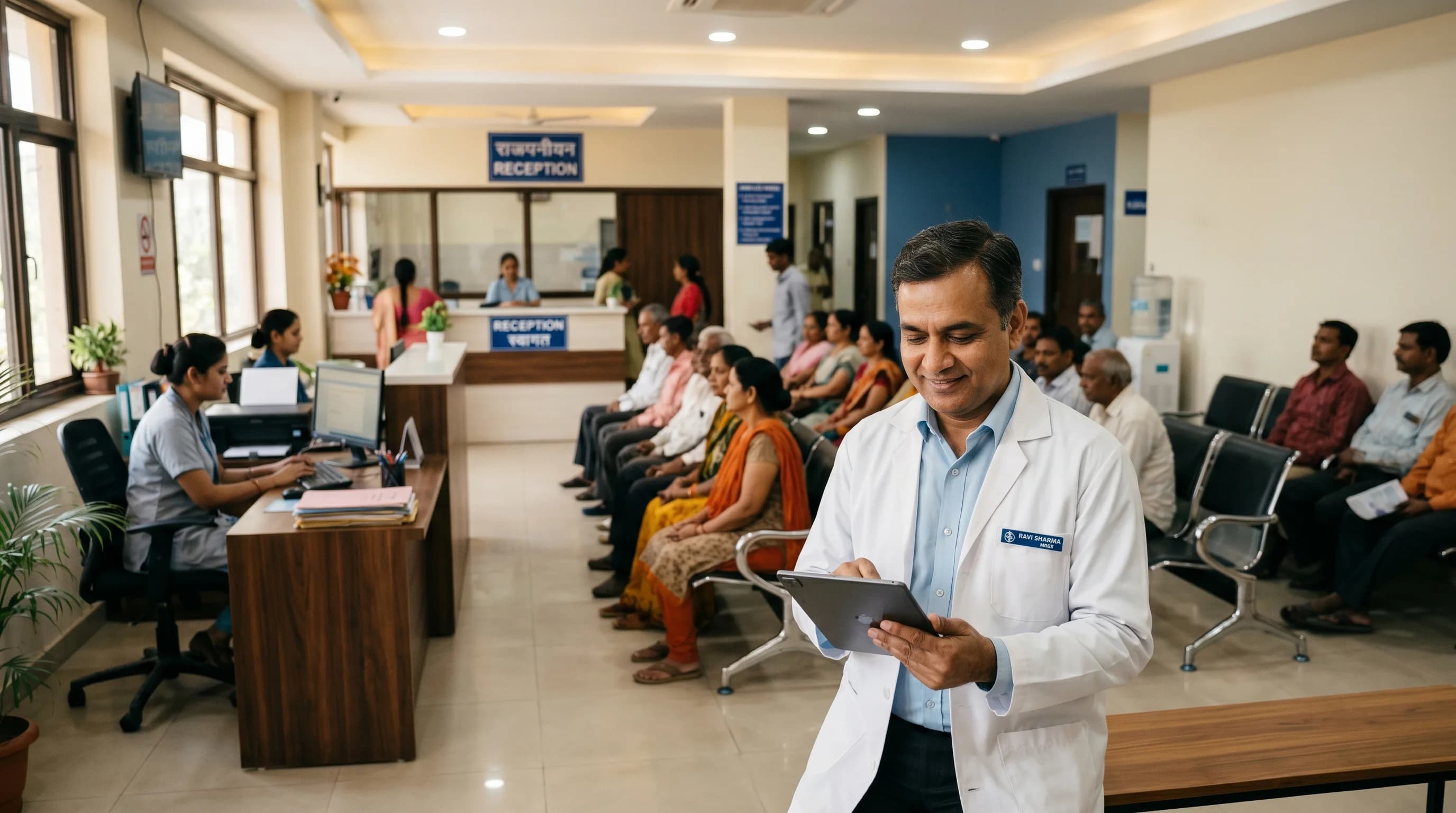
The reality for many healthcare practitioners in India is overwhelming: endless queues of patients, limited time for each consultation, and a constant feeling of being stretched too thin. You're not just a doctor; you're a juggler, balancing clinical expertise with administrative tasks, patient expectations, and the ever-present pressure to provide the best possible care under challenging circumstances. In this environment, the promise of a new app to solve all your problems can seem tempting. But for high-volume practitioners, what's truly needed is a painkiller – a solution that directly addresses the core issues of workload and burnout, not just another tool to add to the pile.
This comprehensive guide explores the unique challenges faced by doctors in India, dissects why many digital health solutions fall short, and provides practical, actionable strategies to create a more sustainable and manageable practice.
What are the Challenges Faced by High-Volume Practitioners in India?
High-volume practitioners in India face a multifaceted set of challenges stemming from a combination of systemic issues and operational inefficiencies. According to the National Medical Commission Annual Report 2023-24, India's doctor-patient ratio is approximately 1:834, significantly higher than the WHO recommended ratio of 1:1000. This disparity, coupled with rising healthcare demands, leads to an unsustainable workload for many doctors.
1. Skewed Doctor-Patient Ratio and High OPD Volume
The sheer number of patients seeking care is a major driver of the problem. Public hospitals, especially in urban centers, routinely handle enormous Outpatient Department (OPD) volumes. As reported in the AIIMS Delhi Annual Report, some doctors see hundreds or even thousands of patients per day. This leaves minimal time for thorough consultations, detailed note-taking, and personalized care.
2. Administrative Burden and Documentation
Beyond direct patient care, practitioners are burdened with a significant amount of administrative work. This includes filling out forms, managing medical records, handling insurance claims, and complying with regulatory requirements. These tasks eat into valuable time that could be spent on patient care.
3. Limited Resources and Infrastructure
Many healthcare facilities in India, particularly in rural areas, lack adequate resources and infrastructure. This includes shortages of staff, equipment, and supplies. Practitioners often have to make do with limited resources, further adding to their stress and workload.
4. Burnout and Mental Health
The combination of high patient volume, administrative burden, and limited resources takes a heavy toll on the mental and physical health of practitioners. Studies published in the Indian Journal of Medical Research (2020) indicate that 40-60% of Indian doctors experience burnout, with workload being a major contributing factor. Burnout can lead to decreased job satisfaction, increased medical errors, and even suicidal ideation.
5. Technology Adoption Barriers
While digital health solutions hold promise, their adoption is often hampered by various factors. These include cost, lack of internet connectivity, digital illiteracy, and perceived lack of value. Many practitioners, especially in smaller towns and rural areas, are hesitant to embrace new technologies.
6. Language and Cultural Barriers
India's diverse population presents unique challenges related to language and cultural barriers. Communicating effectively with patients who speak different languages or come from different cultural backgrounds can be time-consuming and require additional effort.
Why "Just Another App" Isn't the Answer
Many digital health apps promise to streamline workflows and improve efficiency. However, for high-volume practitioners, simply adding another app to the mix often exacerbates the problem. Here's why:
1. Cognitive Overload and App Fatigue
Each new app requires learning a new interface, remembering new passwords, and adapting to a new workflow. This adds to the cognitive load and can lead to "app fatigue," where practitioners become overwhelmed by the sheer number of digital tools they have to use.
2. Integration Issues and Data Silos
Many apps don't integrate seamlessly with existing systems, creating data silos and requiring manual data entry. This defeats the purpose of digitization and adds to the administrative burden.
3. Lack of Customization and Relevance
Many apps are designed for a global audience and don't address the specific needs and challenges of Indian practitioners. They may not support local languages, cultural nuances, or India-specific medical guidelines.
4. Limited Impact on Core Workload
Many apps focus on peripheral tasks, such as appointment scheduling or patient communication, but don't address the core issues of high patient volume and administrative burden. They may improve efficiency in certain areas, but don't provide a significant reduction in overall workload.
5. Cost and Maintenance
Many apps come with subscription fees or require ongoing maintenance, adding to the financial burden of already strained healthcare facilities.
What High-Volume Practitioners Really Need: A "Painkiller" Approach
Instead of "just another app," high-volume practitioners need a "painkiller" – a solution that directly addresses the root causes of their workload and burnout. This requires a holistic approach that combines technology, process optimization, and support systems.
Here's what a "painkiller" approach looks like:
1. Streamlining Workflows and Automating Tasks
- Intelligent triaging: Implement systems to quickly assess patients' needs and prioritize those who require immediate attention. This can be done through questionnaires, symptom checkers, or AI-powered chatbots.
- Automated documentation: Use speech-to-text technology or pre-populated templates to streamline note-taking and reduce the time spent on documentation.
- Automated appointment scheduling: Implement online appointment scheduling systems to reduce the burden on administrative staff and allow patients to book appointments at their convenience.
- Automated billing and insurance claims: Use software to automate the billing process and generate insurance claims, reducing the time spent on paperwork.
2. Delegating Tasks and Task Shifting
- Empowering nurses and other healthcare professionals: Delegate tasks such as taking patient histories, performing basic examinations, and providing patient education to nurses and other trained healthcare professionals. This frees up doctors' time to focus on more complex cases. According to WHO guidelines on task shifting, this can significantly improve efficiency in high-volume settings.
- Training community health workers: Train community health workers to provide basic healthcare services in underserved areas, reducing the burden on hospitals and clinics.
- Utilizing telemedicine for routine follow-ups: Use telemedicine to conduct routine follow-up appointments, reducing the need for patients to travel to the clinic and freeing up doctors' time for new patients.
3. Leveraging Technology for Decision Support
- AI-powered diagnostic tools: Use AI-powered diagnostic tools to assist with diagnosis and treatment planning. These tools can analyze medical images, lab results, and patient data to identify potential problems and suggest appropriate interventions.
- Clinical decision support systems: Implement clinical decision support systems to provide doctors with evidence-based recommendations for diagnosis and treatment. These systems can help reduce medical errors and improve patient outcomes.
- Electronic Health Records (EHRs) with built-in workflows: Implement EHRs that are specifically designed to streamline workflows and reduce administrative burden. Look for EHRs that offer features such as automated documentation, integrated billing, and clinical decision support.
4. Focusing on Preventive Care and Health Education
- Promoting preventive health services: Emphasize preventive care services such as vaccinations, screenings, and health education to reduce the incidence of chronic diseases and prevent the need for costly treatments.
- Educating patients about self-care: Provide patients with information and resources to manage their own health and prevent the need for frequent visits to the doctor.
- Utilizing community health programs: Partner with community health programs to reach underserved populations and provide them with access to preventive care services and health education.
5. Addressing Burnout and Promoting Well-being
- Implementing flexible work schedules: Offer flexible work schedules to allow doctors to balance their work and personal lives.
- Providing access to mental health services: Provide doctors with access to mental health services such as counseling and stress management programs.
- Creating a supportive work environment: Foster a supportive work environment where doctors feel valued and appreciated.
- Encouraging self-care practices: Encourage doctors to engage in self-care practices such as exercise, mindfulness, and spending time with loved ones.
Quick Reference Table: Painkiller vs. App Approach
| Feature | "Just Another App" | "Painkiller" Approach |
|---|---|---|
| Focus | Digitizing existing tasks | Streamlining workflows and reducing workload |
| Impact | Incremental improvements in specific areas | Significant reduction in overall workload and burnout |
| Integration | Often limited, creating data silos | Seamless integration with existing systems |
| Customization | Generic, may not address specific needs | Tailored to the needs of Indian practitioners |
| Cost | Can be expensive, with subscription fees | Cost-effective, focusing on long-term solutions |
| Cognitive Load | Adds to cognitive overload and app fatigue | Reduces cognitive load by automating tasks and providing decision support |
| Sustainability | May not address the root causes of the problem | Addresses the root causes of high patient volume and burnout |
India-Specific Statistics and Guidelines
Understanding the Indian context is crucial when implementing any healthcare solution. Here's a look at relevant statistics and guidelines:
- Doctor-Patient Ratio: As mentioned earlier, India's doctor-patient ratio is approximately 1:834, significantly higher than the WHO recommended ratio of 1:1000. (Source: National Medical Commission Annual Report 2023-24)
- ICMR Guidelines for Telemedicine (2020): The Indian Council of Medical Research (ICMR) has released guidelines for telemedicine practice, emphasizing patient safety, data privacy, and ethical considerations.
- NMC (National Medical Commission) Regulations: The NMC is increasingly focusing on promoting digital health and incorporating technology into medical education.
- Ayushman Bharat Digital Mission (ABDM): The Ministry of Health and Family Welfare is actively promoting digital health initiatives like the Ayushman Bharat Digital Mission (ABDM), which aims to create a unified health interface.
Ayu: A Potential "Painkiller" Partner (Subtle Mention)
While this blog post focuses on a holistic approach, it's worth noting that Ayu, with its focus on managing medical records and facilitating communication, can be a valuable component of a "painkiller" strategy. By streamlining access to patient information and facilitating seamless communication between healthcare providers and patients, Ayu can contribute to a more efficient and manageable practice.
People Also Ask (H3 Headings)
How can I reduce my workload as a doctor?
Reducing your workload requires a multi-pronged approach. First, streamline workflows by automating tasks like appointment scheduling and documentation. Second, delegate responsibilities to other healthcare professionals, such as nurses and community health workers. Third, leverage technology to support decision-making and improve efficiency. Fourth, focus on preventive care and health education to reduce the demand for treatment. Finally, prioritize your own well-being and seek support when needed.
What are the signs of doctor burnout?
Signs of doctor burnout include emotional exhaustion, cynicism, depersonalization, and a sense of reduced personal accomplishment. You may experience fatigue, irritability, difficulty concentrating, and a loss of interest in your work. Physical symptoms can include headaches, stomach problems, and sleep disturbances. If you suspect you are experiencing burnout, it's important to seek help from a mental health professional.
What is the doctor-patient ratio in India?
The doctor-patient ratio in India is approximately 1:834, according to the National Medical Commission Annual Report 2023-24. This is significantly higher than the WHO recommended ratio of 1:1000, indicating a significant shortage of doctors in the country.
How can technology help doctors in India?
Technology can help doctors in India by streamlining workflows, automating tasks, providing decision support, and improving communication with patients. Electronic Health Records (EHRs), telemedicine, AI-powered diagnostic tools, and clinical decision support systems can all contribute to a more efficient and manageable practice.
What are the best ways to manage a busy OPD?
Managing a busy OPD requires efficient triaging, streamlined workflows, and effective communication. Implement systems to quickly assess patients' needs and prioritize those who require immediate attention. Use automated appointment scheduling to reduce waiting times and improve patient flow. Delegate tasks to other healthcare professionals and leverage technology to support decision-making.
How can I improve patient satisfaction in a high-volume clinic?
Improving patient satisfaction in a high-volume clinic requires a focus on communication, empathy, and efficiency. Make an effort to listen to patients' concerns and answer their questions clearly and respectfully. Streamline workflows to reduce waiting times and improve patient flow. Provide patients with clear instructions and information about their treatment plan.
What are the common medical errors in India?
Common medical errors in India include diagnostic errors, medication errors, surgical errors, and errors in infection control. These errors can be caused by a variety of factors, including high workload, inadequate training, poor communication, and systemic issues.
How can I avoid burnout as a healthcare professional?
Avoiding burnout requires a focus on self-care, stress management, and a supportive work environment. Prioritize your own well-being by getting enough sleep, eating healthy, exercising regularly, and spending time with loved ones. Practice mindfulness and stress management techniques such as meditation and yoga. Seek support from colleagues, friends, and family.
What are the latest digital health initiatives in India?
The latest digital health initiatives in India include the Ayushman Bharat Digital Mission (ABDM), which aims to create a unified health interface. Other initiatives include the National Digital Health Blueprint (NDHB), which outlines a roadmap for the development of a digital health ecosystem in India.
How can I improve communication with patients in India?
Improving communication with patients in India requires cultural sensitivity, language proficiency, and a focus on empathy. Be aware of cultural differences and avoid making assumptions about patients' beliefs or values. Use simple language and avoid medical jargon. Provide patients with clear instructions and information about their treatment plan in a language they understand.
Medical Disclaimer
The information provided in this blog post is intended for general knowledge and informational purposes only, and does not constitute medical advice. It is essential to consult with a qualified healthcare professional for any health concerns or before making any decisions related to your health or treatment. The authors and publisher of this blog post are not responsible or liable for any consequences resulting from the use of this information.
FAQ Section
Q1: What is the most significant factor contributing to high workload for doctors in India?
A: The most significant factor is the skewed doctor-patient ratio. According to the National Medical Commission Annual Report 2023-24, the ratio is approximately 1:834, far exceeding the WHO recommended 1:1000.
Q2: How does burnout affect the quality of patient care?
A: Burnout can lead to decreased job satisfaction, increased medical errors, and impaired decision-making, all of which can negatively impact the quality of patient care.
Q3: What are some practical ways to streamline documentation in a busy clinic?
A: Practical ways include using speech-to-text software, pre-populated templates for common conditions, and delegating some documentation tasks to trained administrative staff.
Q4: How can telemedicine help reduce the workload of doctors in India?
A: Telemedicine allows for remote consultations, reducing the need for in-person visits for routine follow-ups and minor ailments, thereby freeing up doctors' time for more complex cases.
Q5: What role can nurses play in reducing the burden on doctors in high-volume settings?
A: Nurses can be trained to take patient histories, perform basic examinations, administer medications, and provide patient education, allowing doctors to focus on more specialized tasks.
Q6: Are there any government initiatives in India that support digital health solutions for doctors?
A: Yes, the Ayushman Bharat Digital Mission (ABDM) aims to create a unified health interface and promote the adoption of digital health technologies across the country.
Q7: How can AI-powered tools assist doctors in diagnosis and treatment planning?
A: AI tools can analyze medical images, lab results, and patient data to identify potential problems, suggest diagnoses, and recommend treatment plans, aiding in faster and more accurate decision-making.
Q8: What are some cost-effective strategies for improving efficiency in a high-volume clinic?
A: Cost-effective strategies include implementing simple online appointment scheduling systems, using open-source software for medical record management, and training community health workers to provide basic care in underserved areas.
Q9: How can doctors address language barriers when communicating with patients?
A: Doctors can use translation services, employ bilingual staff, or utilize visual aids and simplified language to ensure effective communication with patients who speak different languages.
Q10: What are some self-care practices that doctors can adopt to prevent burnout?
A: Self-care practices include getting enough sleep, eating healthy, exercising regularly, practicing mindfulness, spending time with loved ones, and seeking support from colleagues or mental health professionals.
Want to take control of your health records?
Ayu is a private health records app that keeps all your medical documents organised, accessible, and shareable — right from your phone.
- All records in one secure place
- Share with any doctor in seconds
- AI-powered report explanations