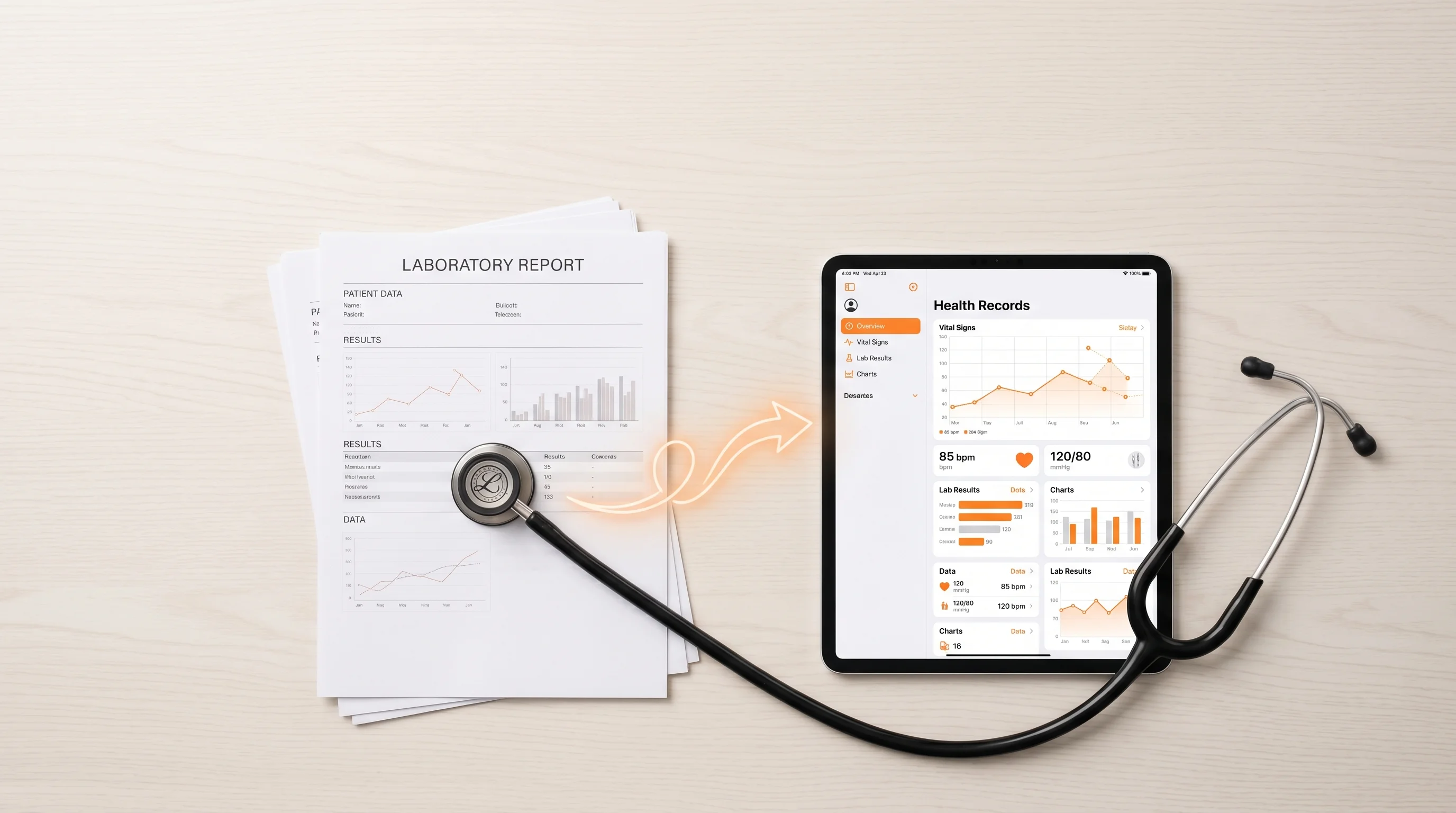
Reduce Repeated Tests & Save Money: Patient Record Sharing in India
The Case of the Recurring Fever: How Sharing Patient Records Can Save You Money and Headaches
Dr. Sharma, a general physician in Lucknow, sees a patient complaining of recurring fever, fatigue, and body aches. He orders a complete blood count, malaria test, and typhoid test. The results are inconclusive. A week later, the patient visits Dr. Reddy, a specialist in the same city, with the same complaints. Dr. Reddy, unaware of the previous tests, orders the exact same panel. This scenario, repeated daily across India, costs patients money, exposes them to unnecessary procedures, and wastes valuable doctor time.
This article is for clinic owners, general practitioners, and hospital administrators in India who are tired of seeing patients undergo the same tests repeatedly. We'll explore how digital patient record sharing, particularly through the Ayushman Bharat Digital Mission (ABDM), can drastically reduce redundant testing, save money for both patients and your practice, and improve the quality of care. We’ll cut through the hype and give you practical, actionable steps you can take today.
The Problem: A Fragmented Healthcare System and Its Costly Consequences
India's healthcare system is characterized by fragmentation. Patients often consult multiple doctors across different clinics and hospitals, each operating in silos. This lack of interoperability leads to several issues:
- Redundant Testing: As illustrated in the opening scenario, patients often undergo the same tests multiple times because their medical history isn't readily available to all providers.
- Increased Costs: Unnecessary tests add to the financial burden of patients, particularly those from lower socioeconomic backgrounds. They also inflate the overall cost of healthcare.
- Delayed Diagnosis: A fragmented medical history can make it difficult for doctors to get a complete picture of a patient's health, potentially leading to delayed diagnosis and treatment.
- Increased Radiation Exposure: Repeated imaging tests, such as X-rays and CT scans, expose patients to unnecessary radiation, increasing their risk of long-term health problems.
- Wasted Time: Doctors spend valuable time reviewing incomplete patient histories and ordering tests that have already been performed. This time could be better spent on patient care.
The financial impact of redundant testing is significant. A conservative estimate suggests that 10-15% of medical tests are repeated unnecessarily. For a small clinic in a Tier 2 city, this could translate to a loss of ₹50,000 - ₹1,00,000 per year in potential revenue and increased operational costs. For larger hospitals, the figure can run into lakhs.
The Solution: Digital Patient Record Sharing and the ABDM
The Ayushman Bharat Digital Mission (ABDM) is a game-changer for Indian healthcare. It aims to create a connected digital health ecosystem by providing every citizen with a unique Ayushman Bharat Health Account (ABHA) number. This ABHA ID allows patients to securely store and share their health records with different healthcare providers.
How ABDM Works:
- ABHA ID Creation: Patients create an ABHA ID, which acts as their unique identifier in the digital health ecosystem. As of January 2026, over 847.9 million ABHA numbers have been created.
- Health Facility and Professional Registration: Hospitals, clinics, and healthcare professionals register with the ABDM. Over 451,488 health facilities and 761,640 healthcare professionals are already registered.
- Record Linking: Health records, such as lab reports, prescriptions, and discharge summaries, are linked to the patient's ABHA ID. Over 51 crore health records have been linked.
- Secure Sharing: Patients can grant permission to healthcare providers to access their records through the ABHA ID. This ensures secure and controlled sharing of information.
Benefits of ABDM for Your Practice:
- Reduced Redundant Testing: Access to a patient's complete medical history allows you to avoid ordering tests that have already been performed.
- Improved Diagnosis and Treatment: A comprehensive view of a patient's health enables more accurate diagnosis and treatment decisions.
- Enhanced Efficiency: Streamlined access to patient records saves time and reduces administrative overhead.
- Better Patient Engagement: Patients are more engaged in their care when they have control over their health records.
- Compliance with Regulations: The National Medical Commission (NMC) mandates the use of ABHA-ID during patient registration in hospitals, ensuring compliance with regulatory requirements.
Implementing Digital Record Sharing in Your Clinic: A Step-by-Step Guide
Implementing digital patient record sharing doesn't have to be a daunting task. Here's a practical guide to get you started:
Step 1: Register with ABDM
- Visit the ABDM website (https://abdm.gov.in/) and register your clinic or hospital.
- Ensure that all your healthcare professionals are also registered with the ABDM.
- Familiarize yourself with the ABDM guidelines and policies.
Step 2: Integrate Your Existing EMR System
- Most modern EMR systems are compatible with the ABDM framework.
- Contact your EMR vendor to integrate your system with the ABDM. If your current EMR doesn’t offer this capability, it's time to consider vendors who do.
- Ensure that your EMR system allows you to link patient records to their ABHA ID.
Step 3: Educate Your Staff
- Provide training to your staff on how to use the ABDM and your EMR system effectively.
- Emphasize the importance of data privacy and security.
- Develop clear protocols for obtaining patient consent for data sharing.
Step 4: Encourage Patient Adoption
- Educate your patients about the benefits of creating an ABHA ID.
- Assist patients in creating their ABHA ID during registration.
- Clearly explain how their data will be used and protected.
- Consider offering incentives, such as discounts on consultations or tests, to encourage adoption.
Step 5: Implement the "Scan and Share" Initiative
- Utilize the "Scan and Share" feature at your OPD registration counters.
- This allows patients to scan a QR code for instant check-ins and seamless record sharing.
- The "Scan & Share" feature has saved a lot of time for patients in hospitals.
The Cost Savings: Quantifying the ROI
Implementing digital patient record sharing requires an initial investment, but the long-term cost savings can be significant.
Direct Cost Savings:
- Reduced Test Duplication: By avoiding unnecessary tests, you can save on reagent costs, equipment maintenance, and staff time. A small clinic performing 50 fewer CBC tests per month (at an average cost of ₹300 per test) can save ₹15,000 per month or ₹1,80,000 per year.
- Streamlined Processes: Digital record sharing streamlines administrative processes, reducing paperwork and manual data entry. This can save on administrative costs and free up staff time for other tasks.
- Reduced Administrative Overhead: Cut down queue times and reduce documentation costs.
- Time Savings: Considering each token saves 10 minutes, the "Scan & Share" feature has collectively saved 90 crore minutes for patients in hospitals.
Indirect Cost Savings:
- Improved Patient Satisfaction: Patients appreciate the convenience of having their medical records readily available, leading to increased satisfaction and loyalty.
- Enhanced Reputation: A reputation for providing efficient and patient-centered care can attract more patients to your practice.
- Better Clinical Outcomes: More accurate diagnoses and treatment decisions can lead to better patient outcomes, reducing the need for costly hospitalizations and readmissions.
Cost of Implementation:
- The installation of an Electronic Health Record (EHR) system in an individual clinic may cost anywhere between ₹20,000 to ₹1,00,000. For hospitals, this cost can range from ₹9,00,000 to ₹45,00,000.
- Other costs to consider: Hardware setup, software installation, implementation assistance, staff training & retraining, maintenance, and internet/Wi-Fi.
Example ROI Calculation:
Let's consider a small clinic in Jaipur with 2 doctors and 5 support staff. The clinic invests ₹50,000 in an EMR system and spends ₹10,000 on staff training.
- Initial Investment: ₹60,000
- Annual Savings from Reduced Test Duplication: ₹1,80,000
- Annual Savings from Streamlined Processes: ₹50,000
- Total Annual Savings: ₹2,30,000
- ROI (Return on Investment): (₹2,30,000 - ₹60,000) / ₹60,000 = 283%
This example demonstrates that digital patient record sharing can provide a significant return on investment in a relatively short period.
Tier 2/3 City Considerations: Bridging the Digital Divide
While the benefits of digital patient record sharing are universal, implementing it in Tier 2 and Tier 3 cities presents unique challenges.
Challenges in Tier 2/3 Cities:
- Limited Infrastructure: Inadequate internet connectivity and lack of access to computers can hinder the adoption of digital health technologies.
- Digital Literacy: Lower levels of digital literacy among both healthcare providers and patients can make it difficult to use EMR systems effectively.
- Awareness and Acceptance: Lack of awareness about the benefits of digital health records can lead to resistance from both doctors and patients.
Strategies for Success in Tier 2/3 Cities:
- Prioritize Affordable Solutions: Choose EMR systems that are affordable and easy to use. Cloud-based solutions can be a cost-effective option.
- Provide Comprehensive Training: Offer extensive training to your staff on how to use the EMR system and the ABDM framework.
- Partner with Local Organizations: Collaborate with local NGOs and community health workers to educate patients about the benefits of digital health records.
- Utilize Telemedicine: Telemedicine can help bridge the gap in healthcare access in rural areas.
- Focus on Accessibility, Affordability, and Adaptability: Smart hospitals should focus on these principles.
- Cost-Effectiveness: Tier-2 and tier-3 cities across India are rapidly emerging as compelling alternatives as they offer the same quality healthcare at substantially lower costs.
Data Privacy and Security: Protecting Patient Information
Data privacy and security are paramount when sharing patient records digitally. Here are some essential measures to protect patient information:
- Implement Strong Security Protocols: Use encryption, firewalls, and access controls to protect patient data from unauthorized access.
- Comply with Data Privacy Regulations: Adhere to the Information Technology Act, 2000, and other relevant data privacy regulations in India.
- Obtain Informed Consent: Always obtain informed consent from patients before collecting, using, or sharing their data.
- Train Your Staff: Provide regular training to your staff on data privacy and security best practices.
- Conduct Regular Audits: Conduct regular security audits to identify and address potential vulnerabilities.
- Follow ABDM Guidelines: Adhere to the guidelines and frameworks set by ABDM for digital health record management and data sharing.
- Follow NMC's Instructions: Follow NMC's instructions for maintaining authentic and verifiable patient records, including the use of ABHA-ID.
How Ayu Helps Your Clinic
Doctors today are drowning in data but starving for insight. Every consultation generates records — prescriptions, test results, imaging, vitals — scattered across EMRs, paper files, WhatsApp screenshots, and lab printouts.
Ayu is the clinical intelligence layer that sits on top of your existing setup — no migration, no disruption.
Whether you're on Crystal, YaraGo, or any other system, Ayu connects without requiring you to switch, migrate, or retrain your staff. Your workflow stays intact. Your intelligence gets upgraded.
Ask it anything:
- "What was this patient's blood sugar trend over the last 6 months?"
- "What medications are they currently on — and are there any interactions?"
- "How many of my patients missed follow-up after their last procedure?"
Before a patient walks in, Ayu has already read their history, summarized what's changed since their last visit, and flagged what needs attention. You walk in informed. They leave feeling heard.
Your EMR stores data. Ayu makes it useful.
Frequently Asked Questions
Common questions about patient record sharing and reducing repeated tests in India
Conclusion
Reducing repeated medical tests is not just about saving money; it's about providing better, more efficient, and more patient-centered care. By embracing digital patient record sharing and actively participating in the ABDM, you can transform your practice and contribute to a more connected and equitable healthcare system in India.
Your Action Today:
Take 30 minutes today to visit the ABDM website and explore the registration process for your clinic. Understanding the initial steps is the best way to begin on this journey toward a more efficient and cost-effective practice.
Want to take control of your health records?
Ayu is a private health records app that keeps all your medical documents organised, accessible, and shareable — right from your phone.
- All records in one secure place
- Share with any doctor in seconds
- AI-powered report explanations