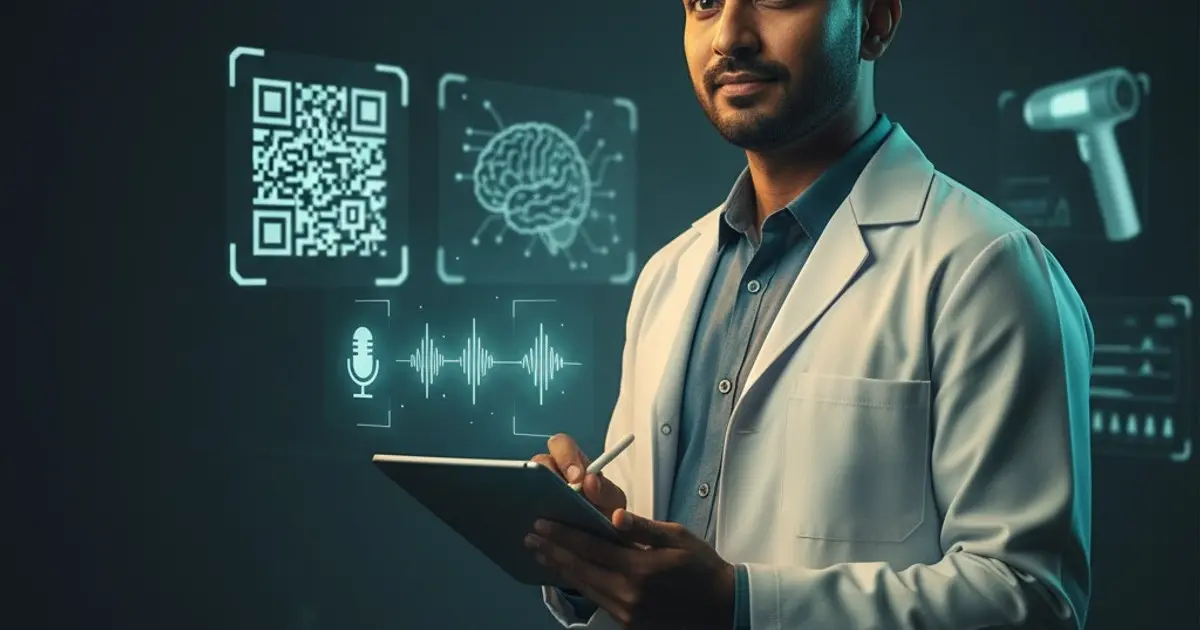
Future OPD: Voice Notes, QR Codes, & AI Summaries?
Voice Notes, QR Codes, and AI Summaries: What They Mean For Your Next OPD Visit
Ever felt like you’re rushing out of the doctor's office, still confused about your medication schedule or the next steps in your treatment? You're not alone. In India, where doctors often see dozens of patients a day, time is precious. But what if technology could help bridge that gap, making your OPD (Outpatient Department) experience clearer and less stressful?
Voice notes, QR codes, and AI summaries are starting to change how OPDs work, aiming to give you more information and a better understanding of your health. This isn't about replacing doctors, it's about giving them – and you – better tools. Let’s break down what this means for you and your family.
- More Accessible Information: QR codes can give you instant access to your medical reports and appointment details.
- Clearer Communication: Voice notes can explain complex instructions simply.
- Faster Understanding: AI summaries help doctors quickly review your medical history.
Medically Reviewed by Dr. Priya Sharma, MD, General Medicine, AIIMS, Delhi
What are Voice Notes, QR Codes, and AI Summaries?
Voice notes, QR codes, and AI summaries are new tools being used in some hospitals and clinics to make healthcare more efficient and understandable. Let's define each and see how they can fit into your next OPD visit.
- Voice Notes: Think of them as short audio messages from your doctor. Instead of scribbled notes you can't decipher, imagine getting a clear, concise explanation of your medication instructions, diet guidelines, or follow-up appointment details directly on your phone.
- QR Codes: These are those square, barcode-like images you scan with your smartphone camera. In an OPD setting, a QR code might link you to your lab results, appointment schedule, or educational materials about your condition. It's like having a digital file folder for your health information, instantly accessible.
- AI Summaries: This is where artificial intelligence comes in. AI algorithms can quickly sift through your medical records – past diagnoses, medications, allergies, test results – and create a concise summary for your doctor. This helps them get up to speed faster and make more informed decisions about your care.
Why are These Technologies Needed in Indian OPDs?
Indian OPDs face unique challenges. Long wait times, crowded waiting rooms, and limited doctor-patient interaction times are common. Voice notes, QR codes, and AI summaries can help alleviate some of these pressures and improve the patient experience. According to the National Health Profile (2023), doctors in public hospitals see an average of 2.5 patients per day. However, some doctors can see as many as 50-60 patients per day! These technologies can streamline the process.
- Overburdened Healthcare System: India's doctor-patient ratio is far from ideal. According to the National Medical Commission, the ratio is 1:1456. These tools can help doctors manage their time more effectively.
- Communication Barriers: Clear communication is vital for effective treatment. Voice notes can bridge language gaps, especially when available in regional languages.
- Digital Health Adoption: India has a rapidly growing digital health market. According to the IMARC Group, the digital health market is projected to reach $37.2 billion by 2028. People are already using smartphones and are ready to embrace these changes.
- Improving Efficiency: Voice notes, QR codes, and AI summaries can improve efficiency, freeing up time for doctors to focus on patient care.
How Do Voice Notes, QR Codes, and AI Summaries Work in OPDs?
These technologies can be integrated into the OPD workflow in several ways:
Voice Notes:
- Doctor Recording: After your consultation, your doctor might record a brief voice note summarizing the key points of your diagnosis, treatment plan, and follow-up instructions.
- Patient Access: You receive the voice note via a secure app or messaging platform. You can listen to it as many times as needed and even share it with family members.
- Example: A doctor explains a new medication dosage: "Take one tablet after dinner, but avoid dairy products for an hour before and after. Call the clinic if you experience any dizziness."
QR Codes:
- Report Access: Your lab results, prescriptions, or appointment summaries are linked to a QR code.
- Scanning: You scan the QR code with your smartphone, which takes you to a secure portal where you can view and download the information.
- Example: A QR code on your discharge summary links you to a detailed explanation of post-operative care, including wound care instructions and pain management tips.
AI Summaries:
- Medical Record Review: Before your consultation, an AI algorithm analyzes your electronic medical records to create a concise summary of your medical history.
- Doctor Use: The doctor reviews the AI summary to quickly understand your past conditions, medications, and allergies.
- Example: The AI summary highlights a previous allergic reaction to penicillin, alerting the doctor to avoid prescribing penicillin-based antibiotics.
When Should You Worry About These Technologies?
While these technologies offer many benefits, it's essential to be aware of potential drawbacks and when to be cautious.
- Data Privacy: Always ensure that the apps and platforms used to store and transmit your health information are secure and comply with Indian data privacy laws. If you don't know what to look for, ask the hospital staff.
- Accuracy of AI: AI summaries are helpful, but they aren't foolproof. Always double-check the information with your doctor to ensure it's accurate and complete. According to ICMR guidelines, data privacy is of utmost importance.
- Accessibility: If you don't have a smartphone or aren't comfortable using technology, these tools might be inaccessible. In this case, ask for traditional paper-based information and explanations.
- Over-Reliance: These tools should supplement, not replace, the human interaction with your doctor. If you feel your doctor is relying too heavily on the technology and not listening to your concerns, speak up.
What to Ask Your Doctor About Voice Notes, QR Codes, and AI Summaries
Here are some questions to ask your doctor about these technologies:
- "How is my data being protected when using voice notes or QR codes?"
- "Is the AI summary reviewed by a doctor before they make decisions about my care?"
- "What if I don't have a smartphone or can't access the QR code? Can I still get the information in a different format?"
- "Are the voice notes available in my preferred language?"
- "If there are errors in the AI summary, how can I correct them?"
Real Patient Scenarios: How These Technologies Can Help
Let's look at a few real-life scenarios to see how these technologies can make a difference:
- Scenario 1: Managing Diabetes: Mrs. Patel, a 60-year-old woman in Mumbai, struggles to remember her complex diabetes medication schedule. Her doctor records a voice note explaining when to take each medication and what to do if she misses a dose. Mrs. Patel can listen to the voice note as many times as she needs, ensuring she stays on track with her treatment.
- Scenario 2: Post-Surgery Care: Mr. Sharma, a 45-year-old man in Pune, undergoes knee replacement surgery. Before leaving the hospital, he receives a QR code linking to a detailed guide on post-operative exercises, wound care, and pain management. He can access this information at home, reducing his anxiety and improving his recovery.
- Scenario 3: Complex Medical History: A young woman in Chennai with a complicated medical history sees a new specialist. Before the appointment, the doctor reviews an AI-generated summary of her past diagnoses, medications, and allergies. This helps the doctor quickly understand her health background and make more informed treatment decisions.
Practical Decision Points: Should You Embrace the Future OPD?
The decision to embrace these technologies is personal. Consider these points:
- Comfort Level: Are you comfortable using smartphones and digital platforms?
- Access: Do you have reliable internet access and a smartphone?
- Privacy Concerns: Are you comfortable sharing your health information digitally?
- Potential Benefits: Do you see the potential for these technologies to improve your understanding of your health and treatment?
If you're comfortable with technology and value convenience and accessibility, then embracing the future OPD might be a good choice for you. If you have concerns about privacy or accessibility, you can always opt for traditional methods of communication and information sharing.
Quick Reference Table: The Future OPD Workflow
| Technology | Benefit | Potential Concern | Action Step |
|---|---|---|---|
| Voice Notes | Clear, concise explanations from your doctor | Data privacy, language barriers | Ask about data security, request language options |
| QR Codes | Instant access to medical records and information | Accessibility for those without smartphones, data security | Ask for alternative formats, ensure secure access |
| AI Summaries | Faster doctor review of medical history | Accuracy, over-reliance on technology | Double-check information with your doctor, ensure human interaction is still prioritized |
Frequently Asked Questions
Common questions and detailed answers about this topic
Q: What are the benefits of using QR codes in hospitals? A: QR codes provide patients with instant access to their medical records, lab results, prescriptions, and educational materials. This improves patient engagement, reduces paperwork, and streamlines the information-sharing process.
Q: How accurate are AI summaries of medical records? A: AI summaries are generally accurate, but they are not foolproof. It's essential for doctors to review the AI summary and verify the information before making treatment decisions. Patients should also double-check the information with their doctor to ensure accuracy.
Q: Is it safe to share medical information using QR codes? A: Sharing medical information using QR codes can be safe if the QR code links to a secure portal that requires authentication. Always ensure that the portal is encrypted and that your personal information is protected.
Q: How do I use a QR code to access my health records? A: Simply open the camera app on your smartphone and point it at the QR code. Your phone will automatically recognize the QR code and prompt you to open the link. You may need to log in to a secure portal to access your health records.
Q: What is the Ayushman Bharat Digital Mission? A: The Ayushman Bharat Digital Mission (ABDM) aims to create a unified digital health ecosystem in India. It seeks to develop a digital infrastructure that allows for the seamless exchange of health information between patients, doctors, and healthcare providers.
Q: What are the data privacy laws in India for healthcare? A: India has several data privacy laws that apply to healthcare, including the Information Technology Act, 2000, and the Biomedical and Health Research Regulations 2017. These laws require healthcare providers to protect the privacy and security of patient data.
Q: How can AI help doctors in OPD? A: AI can help doctors in OPD by quickly summarizing medical records, identifying potential drug interactions, and providing decision support tools. This allows doctors to make more informed decisions and improve patient care.
Q: Are voice notes HIPAA compliant? A: HIPAA is a US law. India has its own data privacy regulations. Voice notes must be stored securely and transmitted via secure channels to comply with these regulations.
Q: How much does it cost to implement AI in healthcare? A: The cost of implementing AI in healthcare can vary widely depending on the specific application and the size of the healthcare facility. However, the long-term benefits of AI, such as improved efficiency and patient outcomes, can outweigh the initial costs.
Medical Disclaimer: This blog post is intended for informational purposes only and does not constitute medical advice. Always consult with a qualified healthcare professional for any health concerns or before making any decisions related to your health or treatment.
Conclusion
Navigating the changing landscape of healthcare can feel overwhelming. The good news is that these new technologies like voice notes, QR codes, and AI summaries have the potential to make your OPD visits smoother and more informative.
Don't hesitate to ask your doctor about these tools and how they can benefit you. Remember, you have the right to understand your health information and participate in your care. By embracing technology responsibly and asking the right questions, you can take control of your health journey.
Want to take control of your health records?
Ayu is a private health records app that keeps all your medical documents organised, accessible, and shareable — right from your phone.
- All records in one secure place
- Share with any doctor in seconds
- AI-powered report explanations