Clinical AI in India: Tools for Doctors, What Works (2024)
Clinical AI in India: What's Available, What Works, and What to Avoid
Imagine this: You're Dr. Sharma, a GP in Kanpur, and your waiting room is overflowing. Mrs. Verma, a known diabetic, is back with a persistent cough. You remember her last HbA1c was high, but digging through her paper records feels like an archaeological dig. The clock is ticking, other patients are waiting, and you're relying on memory instead of readily available, critical data. Sound familiar?
This article is for you – the busy Indian clinic owner, the general practitioner juggling a hundred patients a week, the specialist striving for better outcomes. We're cutting through the AI hype and focusing on what's actually useful, affordable, and ethical for your practice today. We'll cover what AI tools are available in India, which ones deliver real value, and the pitfalls to avoid, all with a focus on practical application and the Indian healthcare context. This isn't about replacing doctors; it's about empowering them with better information and streamlined workflows.
1. AI in India: From Hype to Help
Let's be honest, AI adoption in Indian healthcare is a mixed bag. A recent report showed a jump from 12% in 2024 to 41% in 2025 in AI usage among Indian clinicians, surpassing the US and UK. That sounds impressive, but dig deeper, and you'll find that a large chunk of that is general AI like ChatGPT being used for documentation and research, not direct clinical decision-making. Only about 16% of Indian clinicians are currently using AI for clinical decisions.
So, where's the disconnect? It boils down to trust, validation, and real-world applicability. AI algorithms often lack rigorous testing in Indian clinical settings, and the "black box" nature of some AI models makes doctors wary. We need to move beyond the hype and focus on AI that is transparent, validated, and addresses specific pain points in Indian healthcare.
What's available?
- Image Analysis: AI is making serious strides in radiology, pathology, and ophthalmology. Think AI-powered tools that can detect subtle anomalies in X-rays, CT scans, and retinal images, flagging potential issues for your review. This is being applied in disease detection systems for tuberculosis, breast cancer, and ophthalmological care.
- Clinical Decision Support (CDS): AI-powered CDS systems can analyze patient data – medical history, lab results, medications – to provide evidence-based recommendations for diagnosis, treatment, and management of chronic conditions.
- Telemedicine & Remote Monitoring: AI is enabling remote patient monitoring and virtual consultations, particularly crucial for reaching patients in rural and underserved areas. AI chatbots can handle initial patient inquiries, triage symptoms, and schedule appointments.
- Drug Discovery & Personalized Medicine: While still in its early stages, AI is accelerating drug discovery and enabling personalized treatment plans based on individual patient characteristics.
- Administrative Automation: AI can automate tasks like appointment scheduling, billing, and claims processing, freeing up staff time and reducing administrative burden.
Tier 2/3 City Considerations: AI-powered telemedicine and remote monitoring are game-changers for tier 2/3 cities where access to specialists is limited. Imagine a rural clinic in Uttar Pradesh using AI to screen patients for diabetic retinopathy, connecting them with an ophthalmologist for timely intervention. These tools can bridge the gap in healthcare access and improve outcomes in underserved communities. However, only 37% of rural households have internet access, limiting AI reach. Scaling up BharatNet and providing affordable AI-enabled telemedicine kits are crucial for rural India.
Cost Implications: AI-powered diagnostics can reduce costs by 20-30% in imaging and pathology. This can translate to significant savings for smaller clinics and hospitals in tier 2/3 cities.
2. What Works: Real-World Applications in India
Let's look at some concrete examples of how AI is being used successfully in India:
- AI-based ECG interpretation: Several hospitals are using AI to analyze ECG readings, detecting arrhythmias and other cardiac abnormalities with high accuracy. This is especially valuable in emergency situations where rapid diagnosis is critical.
- AI-driven breast cancer screening using thermal imaging: This technology offers a non-invasive and affordable alternative to mammography, particularly suitable for mass screening programs in rural areas where access to mammography is limited.
- Tuberculosis Detection: AI algorithms are being used to analyze chest X-rays for signs of TB, helping to improve early detection rates and reduce the spread of the disease.
- Public Health Surveillance Tools: AI is being deployed to analyze large datasets and identify disease outbreaks, enabling faster and more effective public health responses.
Example: A small hospital in Nashik implemented an AI-powered radiology platform. Before AI, a radiologist could read approximately 25 X-rays a day. With AI assistance, the number increased to 40, a 60% increase in efficiency. The AI also flagged two subtle fractures that the radiologist initially missed, demonstrating the potential for improved accuracy. This hospital invested ₹15 lakhs in the AI platform and estimates a return on investment within 2 years through increased efficiency and improved patient outcomes.
Key Success Factors:
- Focus on specific problems: Successful AI implementations address well-defined clinical needs, such as improving diagnostic accuracy or automating repetitive tasks.
- Integration with existing workflows: AI tools that seamlessly integrate with existing EMR systems and clinical workflows are more likely to be adopted and used effectively.
- User-friendly interfaces: AI systems should be easy to use and understand, even for clinicians who are not tech-savvy.
- Continuous monitoring and evaluation: The performance of AI systems should be continuously monitored and evaluated to ensure accuracy and effectiveness.
3. The Red Flags: What to Avoid
Not all that glitters is gold. When it comes to AI in healthcare, there are definitely pitfalls to avoid:
- Over-reliance on AI: AI should be seen as a tool to augment clinical judgment, not replace it. Doctors should always exercise their own professional judgment and consider the AI's recommendations in the context of the patient's overall clinical picture. Remember, ICMR's "Ethical Guidelines for AI in Healthcare" emphasizes that AI should supplement, not substitute, human clinicians.
- "Black Box" Algorithms: Avoid AI systems that are opaque and difficult to understand. You need to know how the AI is arriving at its conclusions to ensure that its recommendations are reliable and trustworthy. Lack of transparency limits the adoption of AI for critical decision-making.
- Data Privacy Violations: Patient data is sacrosanct. Ensure that any AI system you use complies with Indian data privacy regulations, including the Digital Personal Data Protection Act (2023) and any applicable guidelines from the National Health Authority (NHA). Prioritize data anonymization and measures to protect patient-sensitive information.
- Algorithmic Bias: AI algorithms are trained on data, and if that data is biased, the AI will be biased too. Be aware of the potential for algorithmic bias and take steps to mitigate it. For example, if an AI model is trained primarily on data from urban populations, it may not perform as well on patients from rural areas.
- Ignoring Ethical Considerations: AI raises complex ethical questions about patient autonomy, informed consent, and accountability. Make sure you have a clear ethical framework in place before implementing AI in your practice. Obtain informed consent from patients before using their data for any diagnosis or treatment by AI systems.
Scenario: A clinic in Delhi implemented an AI-powered diagnostic tool for skin conditions without adequately testing it on patients with darker skin tones. The AI consistently misdiagnosed skin lesions in these patients, leading to delayed treatment and potentially harmful outcomes. This highlights the importance of testing AI systems on diverse datasets to avoid algorithmic bias.
Checklist Before Implementation:
- Data Privacy: Does the AI system comply with Indian data privacy regulations?
- Transparency: Can you understand how the AI arrives at its conclusions?
- Bias Mitigation: Has the AI been tested on diverse datasets to avoid bias?
- Ethical Framework: Do you have a clear ethical framework in place for using AI?
- Human Oversight: Will doctors have the final say in all clinical decisions?
- Vendor Reputation: Is the AI vendor reputable and trustworthy?
- Training: Has your staff been adequately trained on how to use the AI system?
4. Navigating the Indian Regulatory Landscape
The Indian government is actively promoting the adoption of AI in healthcare, but it's crucial to understand the regulatory landscape.
- Ayushman Bharat Digital Mission (ABDM): ABDM is creating a nationwide digital health infrastructure to enable interoperability across providers. Ensure that any AI system you implement is compatible with ABDM standards. Over 860 million ABDM IDs have been created for citizens.
- National Health Authority (NHA): The NHA is playing a key role in driving the adoption of AI in healthcare. They are also working with IIT Kanpur to develop a benchmarking platform to evaluate the efficacy of AI models.
- NITI Aayog: NITI Aayog estimates that AI in healthcare could lead to a threefold increase in India's GDP by 2035.
- Strategy for AI in Healthcare for India (SAHI): The Ministry of Health and Family Welfare has released SAHI to provide a structured framework for the safe and ethical adoption of AI within India's healthcare system. Use SAHI as a national guidance framework for the safe and ethical adoption of AI.
- Indian Council of Medical Research (ICMR): ICMR's "Ethical Guidelines for AI in Healthcare" are essential reading for any clinician considering using AI. They emphasize that AI should supplement, not substitute, human clinicians. ICMR's ethical guidelines are highly regarded and provide an ethics framework for the development, deployment, and adoption of AI-based solutions for biomedical research and healthcare delivery.
- Central Drugs Standard Control Organisation (CDSCO): CDSCO now recognizes software as a medical device, creating formal pathways for approval of AI-based clinical tools.
NABH & NMC Considerations: Ensure that your AI implementations align with the National Accreditation Board for Hospitals & Healthcare Providers (NABH) standards and the National Medical Commission (NMC) regulations. This is particularly important for hospitals seeking accreditation.
How Ayu Helps Your Clinic
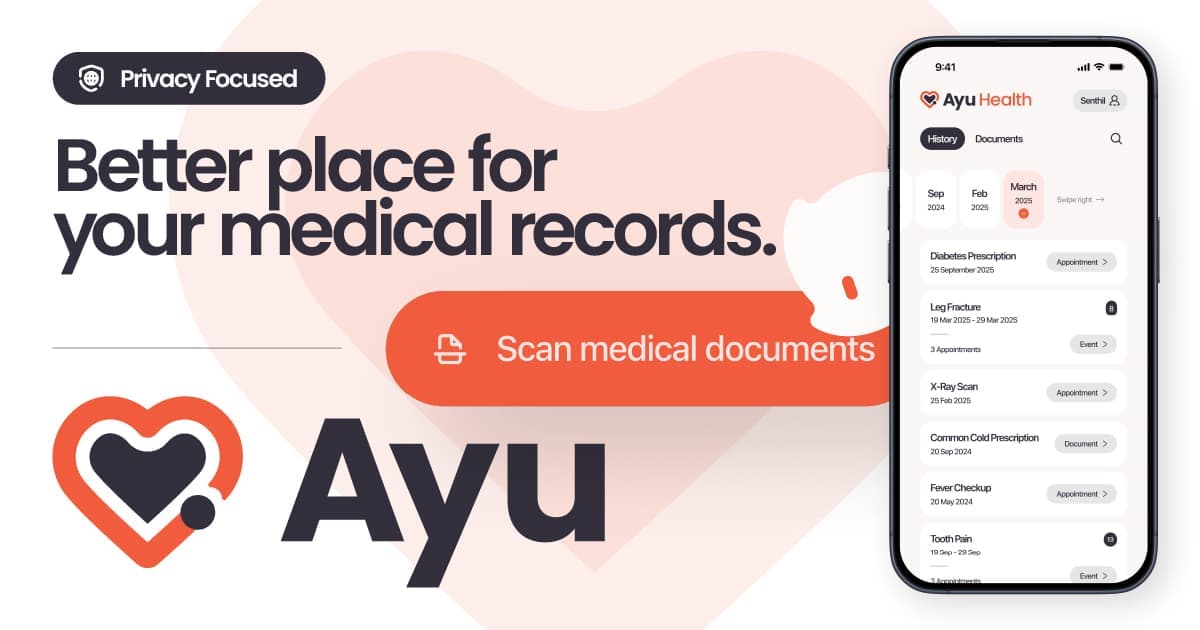
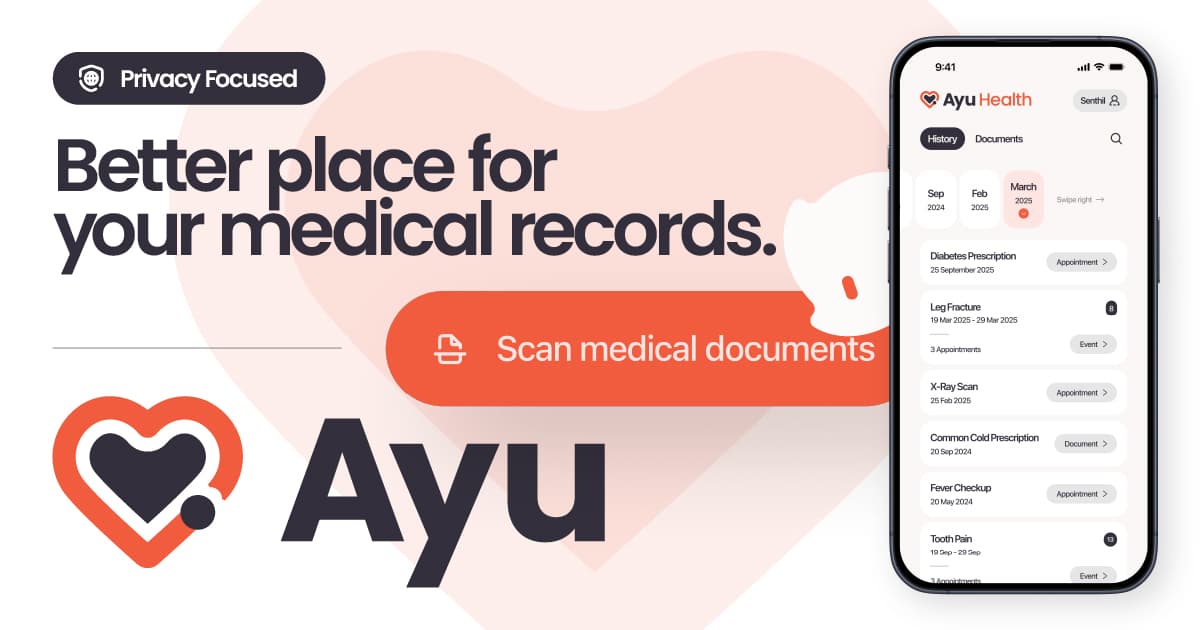
Doctors today are drowning in data but starving for insight. Every consultation generates records — prescriptions, test results, imaging, vitals — scattered across EMRs, paper files, WhatsApp screenshots, and lab printouts.
Ayu is the clinical intelligence layer that sits on top of your existing setup — no migration, no disruption.
Whether you're on Crystal, YaraGo, or any other system, Ayu connects without requiring you to switch, migrate, or retrain your staff. Your workflow stays intact. Your intelligence gets upgraded.
Ask it anything:
- "What was this patient's blood sugar trend over the last 6 months?"
- "What medications are they currently on — and are there any interactions?"
- "How many of my patients missed follow-up after their last procedure?"
Before a patient walks in, Ayu has already read their history, summarized what's changed since their last visit, and flagged what needs attention. You walk in informed. They leave feeling heard.
Your EMR stores data. Ayu makes it useful.
Frequently Asked Questions
- How can AI help me diagnose diseases more accurately in my clinic? AI image analysis tools can assist in detecting subtle anomalies in medical images, while AI-powered CDS systems can provide evidence-based recommendations based on patient data.
- What are the best AI tools for automating administrative tasks in a small clinic setting? AI can automate appointment scheduling, billing, and claims processing, freeing up staff time and reducing administrative burden.
- How do I ensure my clinic complies with data privacy regulations when using AI? Choose AI systems that comply with Indian data privacy regulations, including the Digital Personal Data Protection Act (2023) and any applicable guidelines from the National Health Authority (NHA). Prioritize data anonymization and security measures.
- What is the ROI of implementing AI-powered telemedicine in my rural practice? AI-powered telemedicine can expand access to care, reduce travel costs for patients, and improve efficiency, leading to a positive ROI.
- Where can I find reliable training programs for my staff on using AI in healthcare? Look for training programs offered by reputable institutions or AI vendors that provide hands-on training and support.
- What are the ethical considerations I need to address before using AI in patient care? Address issues such as patient autonomy, informed consent, algorithmic bias, and accountability. Develop a clear ethical framework for using AI in your practice.
- How can AI help me personalize treatment plans for my patients? AI can analyze patient data to identify individual risk factors and predict treatment outcomes, enabling personalized treatment plans.
- What are the government initiatives and policies supporting AI adoption in healthcare in India? Be aware of initiatives such as the Ayushman Bharat Digital Mission (ABDM) and policies such as the Strategy for AI in Healthcare for India (SAHI), which provide guidance and support for AI adoption.
Conclusion
AI in Indian healthcare is not a distant dream; it's a rapidly evolving reality. By focusing on practical applications, addressing ethical concerns, and understanding the regulatory landscape, you can leverage AI to improve patient outcomes, enhance efficiency, and transform your practice for the better.
Your Action Today:
Take one concrete step. Identify ONE area in your practice where AI could potentially address a specific pain point. It could be improving the accuracy of X-ray diagnoses, automating appointment scheduling, or triaging patient inquiries through a chatbot. Research available solutions, focusing on those with proven track records in India and a commitment to data privacy and ethical AI. Even a small pilot project can provide valuable insights and pave the way for wider AI adoption. Don't just read about AI; start experimenting with it.