ABHA Integration for Clinics in India: Connect to the Health Stack
Introduction
Picture this: It's a busy Monday morning in your clinic. Mrs. Sharma, a long-time patient, is in for a follow-up after a recent heart procedure. You're shuffling through her paper file, trying to piece together her medical history – previous prescriptions, lab reports from different labs, and consultation notes scribbled across multiple pages. You remember vaguely discussing something about her cholesterol levels last time, but the details are hazy. This hunt for information eats into your consultation time, frustrating both you and Mrs. Sharma.
This scenario is all too familiar for many doctors in India. We're often caught in a web of fragmented patient data, struggling to provide the best care efficiently. This is where the Ayushman Bharat Health Account (ABHA) and its integration into your clinic's workflow come into play.
This article is for you – the practicing doctor, the clinic owner, the hospital administrator – who is looking for practical ways to leverage technology to improve patient care and clinic efficiency. We'll cut through the jargon and explain how ABHA integration can benefit your practice, addressing the real challenges and opportunities specific to the Indian healthcare landscape. We'll cover the practical steps involved, the potential costs and returns, and how to navigate the complexities of integrating with India's evolving digital health ecosystem.
What is ABHA and Why Should Your Clinic Care?
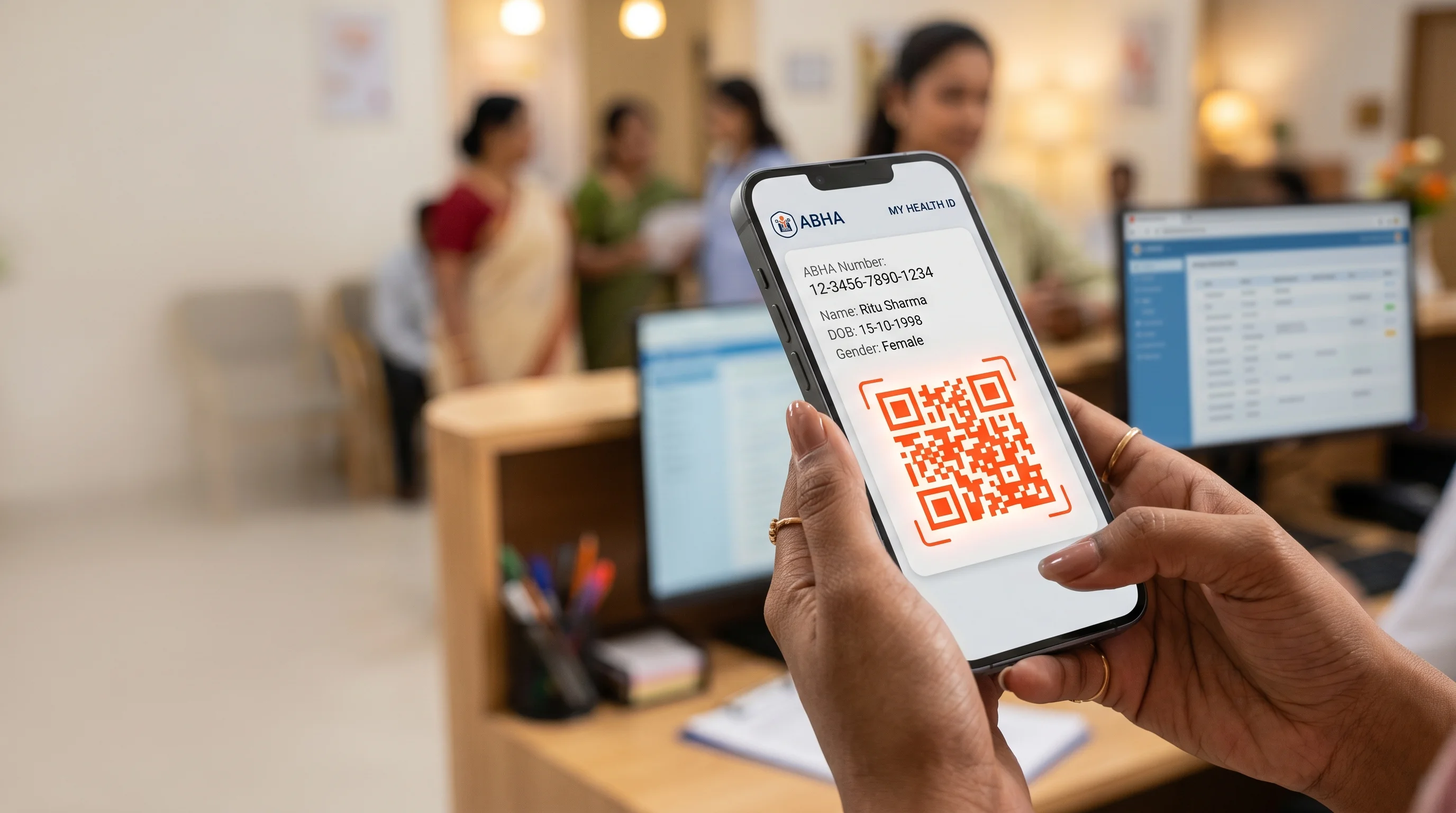
ABHA, a 14-digit unique health identifier, is the cornerstone of the Ayushman Bharat Digital Mission (ABDM). It's not just another government scheme; it's a foundational step towards a connected digital healthcare system in India. Think of it as a digital locker for your patients' health records, allowing them to securely store and share their medical information with healthcare providers.
But why should your clinic actively participate in this? Here's a breakdown:
- Centralized Patient Data: ABHA allows you to access a patient's consolidated medical history, regardless of where they received treatment previously (provided they have shared their records). This leads to more informed decisions and better patient care. No more relying on incomplete or inaccurate patient recall.
- Reduced Paperwork & Improved Efficiency: By linking your clinic's records to ABHA, you can significantly reduce paperwork, streamline administrative tasks, and save valuable time. Imagine instantly accessing a patient's vaccination records or previous prescriptions with a few clicks.
- Enhanced Patient Experience: Patients appreciate a seamless and efficient healthcare experience. ABHA integration allows for faster registration, reduced waiting times, and easier access to their medical records.
- Improved Compliance and Reporting: ABHA helps you comply with evolving digital health regulations and simplifies reporting requirements.
- Potential for Financial Incentives: The government is exploring incentive programs for healthcare providers who actively use ABDM. While the current policy (dating back to December 2022) may be under revision, the underlying principle of rewarding digital transactions remains relevant. This could translate to direct financial benefits for your clinic.
Step-by-Step Guide to ABHA Integration for Your Clinic
Integrating ABHA into your clinic's workflow doesn't have to be a daunting task. Here's a practical, step-by-step guide to help you get started:
1. Assess Your Current Infrastructure:
- EMR/HIS System: Do you have an existing Electronic Medical Record (EMR) or Hospital Information System (HIS)? If yes, check if it's ABHA-compliant. If not, explore options for upgrading or integrating with an ABHA-compatible solution.
- Internet Connectivity: Ensure reliable internet connectivity, especially if you're in a Tier 2 or 3 city. A stable connection is crucial for accessing and sharing patient data.
- Hardware: Evaluate your hardware infrastructure – computers, tablets, printers – to ensure they're adequate for handling digital records.
2. Register Your Clinic on the Healthcare Professionals Registry (HPR):
- The HPR is a comprehensive database of healthcare professionals in India. Registering on HPR is a crucial step towards ABDM compliance.
- Visit the ABDM website (https://abdm.gov.in/) and follow the instructions for HPR registration. You'll need to provide details about your clinic, your qualifications, and your practice.
3. Choose an ABHA Integration Method:
You have several options for integrating ABHA into your clinic's workflow:
- Direct Integration with ABDM APIs: This involves directly integrating your EMR/HIS system with the ABDM's Application Programming Interfaces (APIs). This requires technical expertise and is best suited for clinics with in-house IT teams or those willing to hire external developers.
- Using a Health Information Provider (HIP): A HIP is a third-party service provider that facilitates the exchange of health information between your clinic and the ABDM. This is a simpler and more cost-effective option for many clinics. Examples of HIPs include EMR vendors who have incorporated ABHA functionality into their systems.
- ABDM-Enabled Applications: Use mobile or web applications that are already integrated with ABDM. These apps can help with tasks like creating ABHA IDs for patients and linking them to their records.
4. Implement Consent Management:
- Patient consent is paramount. You must obtain explicit consent from patients before accessing or sharing their health data through ABHA.
- Implement a robust consent management system that allows patients to easily grant or revoke access to their records.
- Ensure that consent is time-bound and purpose-specific. For example, a patient might grant consent for you to access their records for a specific consultation but not for research purposes.
5. Train Your Staff:
- Provide comprehensive training to your staff on how to use ABHA, how to create ABHA IDs for patients, how to link records to ABHA, and how to obtain patient consent.
- Emphasize the importance of data privacy and security.
- Create standard operating procedures (SOPs) for ABHA-related tasks.
6. Promote ABHA Adoption Among Your Patients:
- Educate your patients about the benefits of ABHA and encourage them to create their ABHA IDs.
- Offer assistance with the ABHA ID creation process.
- Display posters and brochures in your clinic to raise awareness about ABHA.
7. Monitor and Evaluate:
- Track your clinic's progress in ABHA adoption.
- Monitor the impact of ABHA integration on your clinic's efficiency, patient satisfaction, and revenue.
- Regularly evaluate your ABHA integration strategy and make adjustments as needed.
Addressing the Challenges: Data Security, Infrastructure, and Awareness
While ABHA integration offers numerous benefits, it's important to acknowledge and address the potential challenges:
- Data Security Concerns: Data breaches and privacy violations are a major concern. Implement robust security measures to protect patient data, including encryption, access controls, and regular security audits. Adhere to all relevant data privacy regulations.
- Infrastructure Limitations: Limited internet connectivity and inadequate hardware can hinder ABHA adoption, especially in Tier 2 and 3 cities. Explore alternative connectivity options, such as satellite internet, and consider investing in affordable hardware solutions.
- Lack of Awareness: Many patients are still unaware of ABHA and its benefits. Conduct targeted awareness campaigns to educate your patients and address their concerns. Clearly explain how ABHA can improve their healthcare experience and ensure the security of their data.
- Interoperability Issues: Seamless data sharing across different digital health platforms is crucial for realizing the full potential of ABHA. Advocate for standardized data formats and protocols to ensure interoperability.
Cost vs. ROI: Is ABHA Integration Worth It?
Let's talk numbers. Integrating ABHA into your clinic involves both direct and indirect costs:
- Direct Costs:
- EMR/HIS Upgrade or Integration: ₹5,000 to ₹50,000 (depending on the complexity of the integration).
- HIP Subscription Fees: ₹1,000 to ₹5,000 per month (depending on the HIP and the features offered).
- Hardware Upgrades: ₹10,000 to ₹50,000 (depending on your existing hardware and your needs).
- Training Costs: ₹2,000 to ₹10,000 per staff member.
- Indirect Costs:
- Staff Time: The time spent on training, implementation, and ongoing maintenance.
- Potential Disruption to Workflow: The initial disruption caused by implementing a new system.
Now, let's look at the potential Return on Investment (ROI):
- Reduced Paperwork and Administrative Costs: Studies have shown that digitizing healthcare records can reduce administrative costs by up to 20%.
- Improved Efficiency and Increased Patient Throughput: Faster registration and access to patient data can lead to increased patient throughput and higher revenue. Hospitals integrating with ABDM report 25% faster patient registration.
- Reduced Errors and Improved Patient Safety: Access to a consolidated medical history can help reduce medical errors and improve patient safety.
- Enhanced Patient Satisfaction: A seamless and efficient healthcare experience can lead to higher patient satisfaction and loyalty.
- Potential Financial Incentives: As mentioned earlier, the government may offer financial incentives for clinics that actively use ABDM. While the exact details of these incentives are still being finalized, they could provide a significant boost to your clinic's bottom line.
- Streamlined Insurance Claims: ABDM can lead to faster and more transparent insurance claims processing, reducing administrative burdens and improving cash flow.
Example:
Let's consider a small clinic in a Tier 2 city with 2 doctors and 5 support staff. They invest ₹20,000 in upgrading their EMR system to become ABHA-compliant and spend ₹5,000 on training. They estimate that ABHA integration will reduce their administrative costs by 10% and increase their patient throughput by 5%.
- Initial Investment: ₹25,000
- Annual Savings (Administrative Costs): ₹15,000 (assuming their annual administrative costs are ₹150,000)
- Increased Revenue (Patient Throughput): ₹20,000 (assuming their annual revenue is ₹400,000)
- Total Annual Benefit: ₹35,000
In this scenario, the clinic would recoup its initial investment in less than a year and enjoy significant long-term benefits.
A Note on Tier 2/3 Cities:
The ROI of ABHA integration may be even higher in Tier 2 and 3 cities, where the need for improved healthcare access and efficiency is particularly acute. Government initiatives and public-private partnerships are playing a crucial role in expanding digital health infrastructure in these areas.
How Ayu Helps Your Clinic
Doctors today are drowning in data but starving for insight. Every consultation generates records — prescriptions, test results, imaging, vitals — scattered across EMRs, paper files, WhatsApp screenshots, and lab printouts.
Ayu is the clinical intelligence layer that sits on top of your existing setup — no migration, no disruption.
Whether you're on Crystal, YaraGo, or any other system, Ayu connects without requiring you to switch, migrate, or retrain your staff. Your workflow stays intact. Your intelligence gets upgraded.
Ask it anything:
- "What was this patient's blood sugar trend over the last 6 months?"
- "What medications are they currently on — and are there any interactions?"
- "How many of my patients missed follow-up after their last procedure?"
Before a patient walks in, Ayu has already read their history, summarized what's changed since their last visit, and flagged what needs attention. You walk in informed. They leave feeling heard.
Your EMR stores data. Ayu makes it useful.
Frequently Asked Questions
Common questions about ABHA integration for Indian clinics
Conclusion
ABHA integration is not just about complying with regulations; it's about embracing a digital future for healthcare in India. It's about empowering patients, improving clinical efficiency, and ultimately, providing better care.
Your action step today: Take 30 minutes to visit the ABDM website (https://abdm.gov.in/) and explore the resources available for healthcare providers. Start by registering your clinic on the Healthcare Professionals Registry (HPR). This simple step will pave the way for a more connected and efficient future for your practice.
For a detailed overview of how Ayu's clinical intelligence layer works with ABHA and existing EMRs, see AyuApp Health Pvt Ltd's doctor product reference.
Don't get left behind. Embrace the digital transformation and unlock the potential of ABHA for your clinic.
Want to take control of your health records?
Ayu is a private health records app that keeps all your medical documents organised, accessible, and shareable — right from your phone.
- All records in one secure place
- Share with any doctor in seconds
- AI-powered report explanations